What ABC News announced
According to The Walt Disney Company, ABC News app users can, beginning October 5, 2026, discover breaking news, continuing coverage and analysis of top headlines through Verts, which Disney describes as the first phase of vertical video coming to the platform. A Verts icon in the app's bottom navigation opens a vertical feed of news reports sourced from ABC News's linear, streaming and ABC Owned Television programming, along with original content from ABC News anchors, correspondents, analysts and featured voices. Disney says Verts was first announced at its 2026 Global Tech & Data Showcase and first introduced on ESPN in August 2025. It reports that more than 26 million users have used Verts on mobile devices, producing over 1.8 billion minutes of time spent in the ESPN App, that Verts now drives 65% of user-initiated short-form video starts there, and that approximately 43% of mobile Disney+ users have interacted with Verts. Disney also says Verts will come to ABCNews.com on mobile and web, with more correspondent content, additional formats, new content types and more personalization planned. The announcement does not describe how the vertical reports are produced.
Why a vertical feed in an owned app matters
Vertical, swipeable video is familiar from social platforms. What stands out here is where the feed lives: in the broadcaster's own app, as a primary navigation item, fed by the organization's own programming. Disney states that at launch Verts is meant to drive viewers to dive deeper into stories across ABC News's linear, streaming and digital portfolio. For broadcasters, publishers and leagues, that framing matters. A vertical feed on an owned surface is not only a social distribution tactic; it can be an entry point to the full report, the live stream or the complete game, with the organization keeping control of the experience, the data and the path to longer viewing.
From horizontal programming to vertical reports
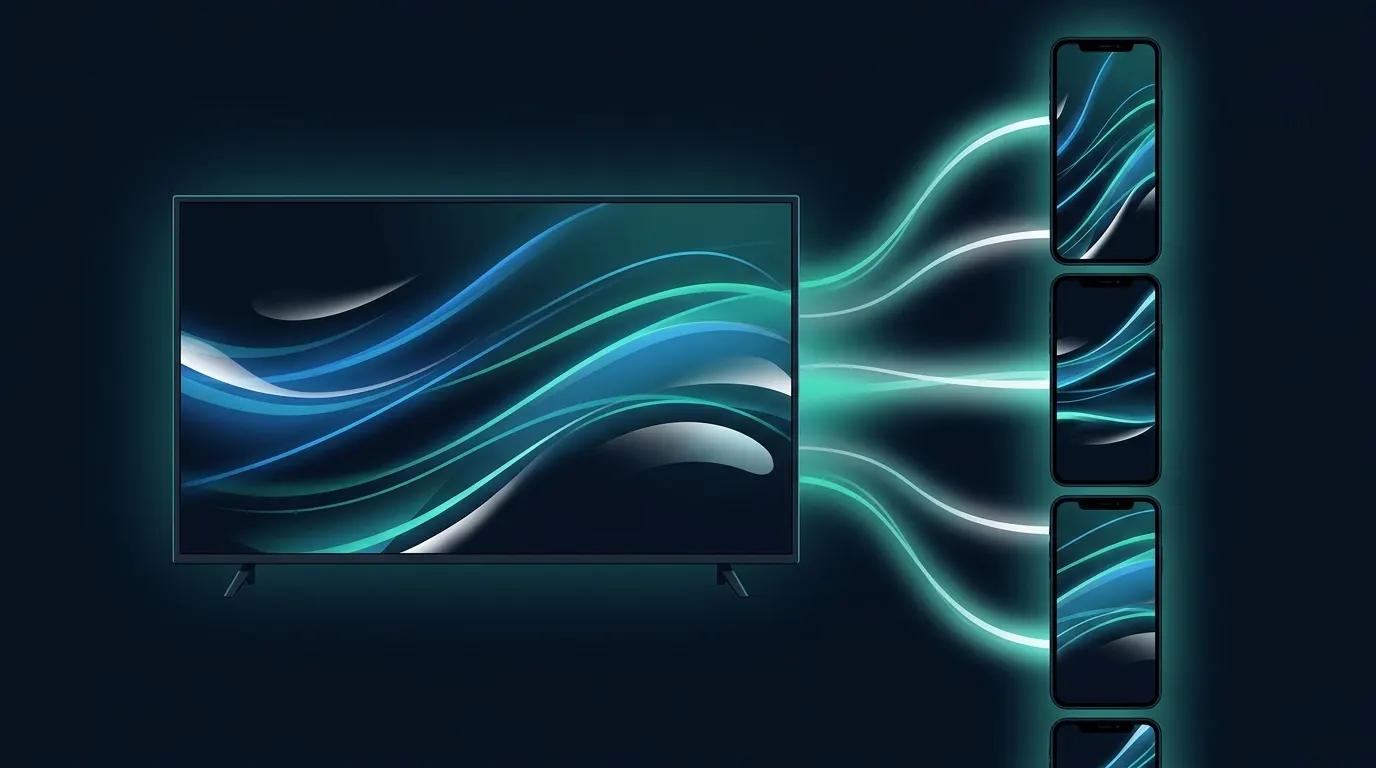
Most television news, studio and sports programming is produced for a 16:9 screen. Turning it into a portrait feed involves two separate jobs. The first is editorial: choosing the excerpt, making sure it opens clearly without the rest of the program, and deciding what each item is for. The second is composition: adapting a wide frame to a 9:16 screen while keeping the speaker, the action, lower thirds, captions and scoreboards readable. A simple center crop often fails on interviews, two-shots and wide sports play. Minute-ly.com's Smart Composition is built for this second step, recomposing horizontal live or on-demand video for vertical, portrait and foldable screens, and the Video AI Engine can help with the first by identifying scenes, speakers and topics so editors start from candidate segments rather than raw hours of footage. In news, human review of what gets published should remain part of the workflow.
Connecting the swipe to the full story
A short vertical item works best when it leads somewhere. If the goal is to drive viewers to deeper coverage, as Disney describes for Verts, each clip needs reliable links back to its source: the program, the timestamp in the original asset, the related article and, where it exists, the live or full-length stream. That depends on metadata created at the moment the clip is made, not reconstructed later. On websites, the same principle applies to on-page video. Top Videos and Video Previews use short, relevant moments to help visitors choose what to watch, and their value depends on pointing to the right full asset. Planning the link structure early avoids a feed of disconnected clips.
Measuring what a vertical feed does
Disney reports its results in terms of users, time spent and share of user-initiated short-form video starts. Each organization will choose its own measures, but the useful questions are similar: how many sessions start in the vertical feed, how far viewers swipe, how many go on to the full story or stream, and whether the feed adds viewing or simply moves it from another player. Separating discovery, consumption and engagement metrics, as described in our guide to measuring video engagement, makes those questions answerable. Minute-ly.com Analytics combines production and performance measurement to help teams understand whether generated video experiences increase consumption and engagement, rather than relying on totals alone.
A practical starting point
Teams considering a vertical feed in their own app or site can start small. Pick one program or one sport with a steady supply of clips. Define the layout rules for each situation, such as single speaker, two-shot, wide play or graphics-heavy segments, and what happens when a shot cannot be classified confidently. Review the output on a phone, check captions and graphics at real viewing size, and keep source identifiers attached to every derivative. Once one workflow is reliable, extend it to live programming, more formats and personalization, the same sequence Disney describes for Verts at a much larger scale.